
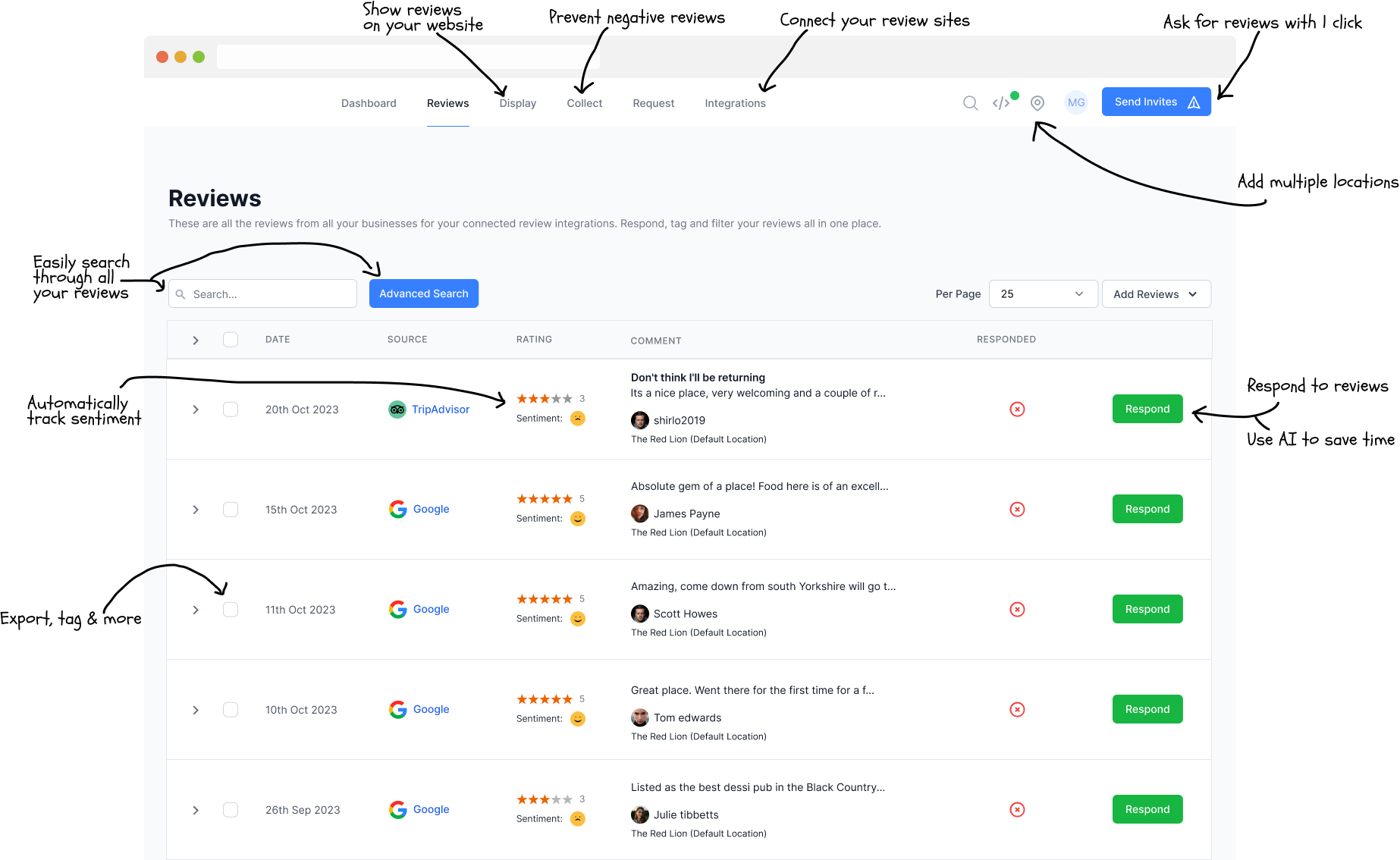
A review reply is written for two audiences: the customer who left the feedback and every future customer who reads it. A thoughtful response can reinforce a positive experience, calm a difficult situation and demonstrate how your business treats people.
You do not need a long reply. You need a response that is prompt, relevant and recognisably human.
Why responding to reviews matters
When a business responds, customers can see that feedback reaches a real person. Consistent replies also help your team spot recurring praise and repeated service issues.
For local businesses, the way you handle a critical review may matter as much as the rating itself. A calm and constructive response can give prospective customers confidence that problems will be taken seriously.
How to reply to a positive review
Thank the customer, mention a relevant detail from their review and keep the wording natural. If appropriate, invite them back without turning the response into an advertisement.
Example: “Thanks, Sarah. We’re glad the team could complete the installation before your opening day. We really appreciate you taking the time to share your experience.”
- Use the customer’s name when appropriate
- Reference something specific they mentioned
- Keep the reply warm and concise
- Avoid pasting the same generic sentence under every review
How to reply to a negative review
Start by pausing. Do not reply while frustrated, and do not argue point by point in public. Acknowledge the customer’s experience, apologise where appropriate and offer a clear next step through a private channel.
Example: “Hi James, we’re sorry the collection was not ready at the agreed time. That is not the experience we aim to provide. Please contact us at [phone or email] so we can look into the order and put this right.”
- Acknowledge the concern without becoming defensive
- Use a calm, professional tone
- Protect personal and order information
- Move detailed problem-solving to phone or email
- Follow through after the public reply
What if the review appears unfair or false?
Check your records before responding. If you cannot identify the customer, say so politely and invite them to contact you with more information. Avoid accusing the reviewer publicly.
If the content violates the platform’s policies—for example, spam, impersonation or unrelated content—use the platform’s reporting process. A low rating alone is not normally grounds for removal.
Set a simple response standard for your team
Choose who owns review responses, what requires manager approval and how quickly the team should reply. Many businesses aim to acknowledge new reviews within one or two working days.
Create guidance rather than rigid templates. Useful guidance includes preferred tone, sign-off style, escalation contacts and examples for common situations.
Use AI as an assistant, not an autopilot
AI can draft a clear response quickly, especially when review volume grows across several platforms or locations. The best results come from setting the business tone and checking each draft for accuracy and sensitivity.
Automatic replies may suit simple positive feedback. Complaints, safety concerns, legal issues and sensitive personal situations should be reviewed by a person before publishing.
- Give AI the review and your preferred tone
- Check names, facts and promises before posting
- Remove repetitive or overly formal wording
- Escalate serious complaints to a responsible team member
Learn from patterns, not just individual ratings
One review may reflect one unusual experience. A pattern across many reviews can reveal something operational: slow communication, a popular team member, confusing instructions or a product customers consistently love.
Review analytics and sentiment summaries can help group those themes, but the next step belongs to the business—recognise what works and fix the friction customers mention repeatedly.
Reply promptly, refer to the customer’s actual experience and keep difficult conversations calm. AI can save time drafting responses, but accountability and good judgement should remain with your team.