
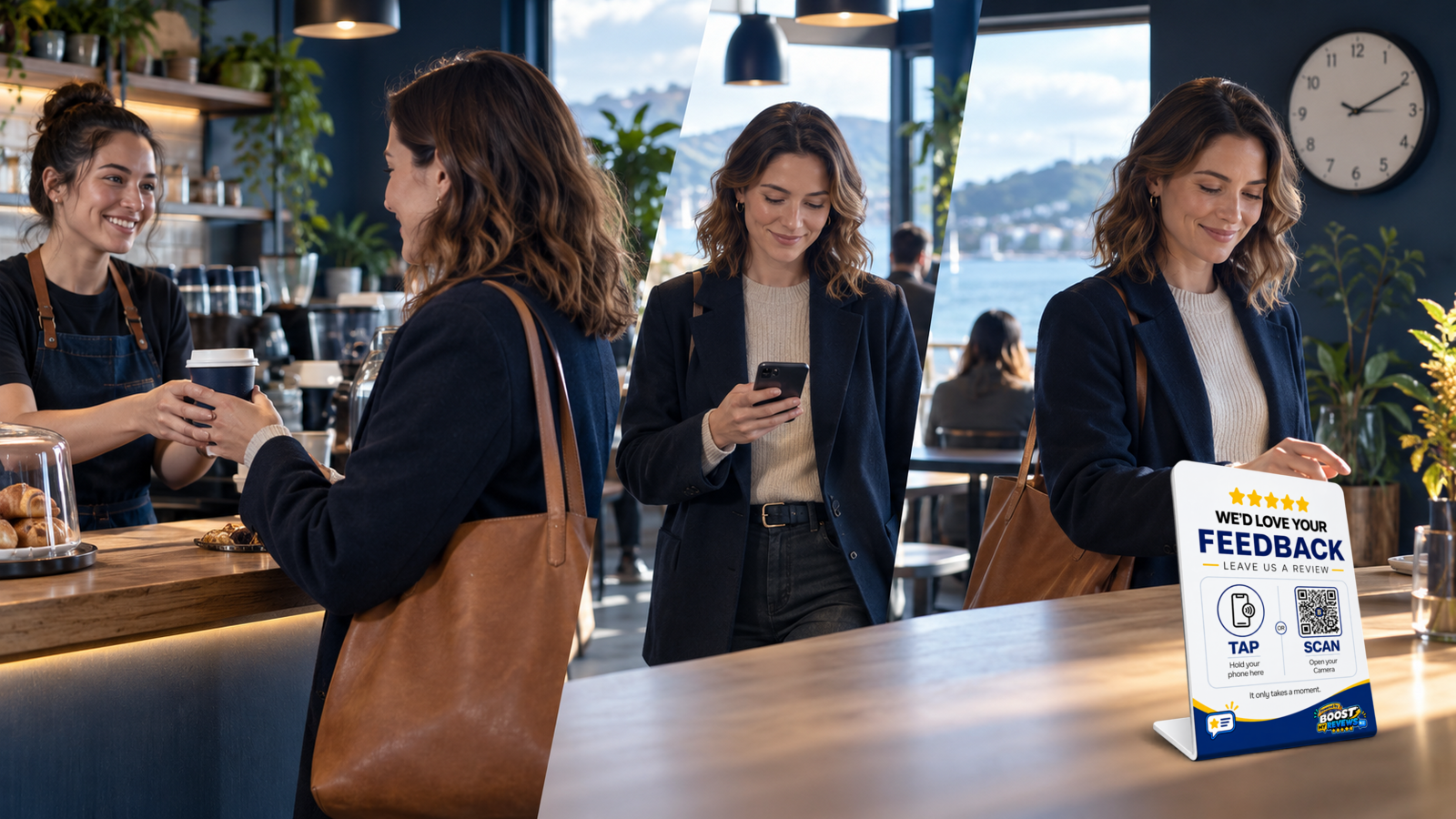
The best time to ask for a review is not a universal number of minutes or days. It is the point when the customer has received enough value to describe a genuine, completed experience—and when the request will not interrupt the service itself.
For a café, that moment may be at the end of a pleasant visit. For a trades business, it may be after the customer has checked the finished work. For a hotel, it is often after checkout. Good review request timing follows the customer journey rather than forcing every business into the same schedule.
Start with the peak satisfaction moment
The peak satisfaction moment is the point at which the customer can clearly recognise the value they received. It may follow a successful handover, a solved problem, a compliment, a completed appointment or a confirmed result.
This does not mean asking at the most emotional second of the interaction. The customer still needs enough space to enjoy the outcome and make an independent choice. The ideal moment is positive, complete and unhurried.
Think in milestones rather than a fixed clock. Ask: Has the promised service been delivered? Has the customer had a fair chance to assess it? Is there any unresolved concern? Would an invitation now feel helpful rather than distracting?
- The customer has received the product, service or result
- The main questions have been answered
- There is a natural pause or closing moment
- The customer is not rushing, paying or handling a problem
- The request can be made once, clearly and without pressure
Immediate requests versus email and SMS follow-up
An immediate in-person request works best when the experience is complete and the customer has a natural moment to respond. A visible NFC counter stand or QR code removes the need to search for the business and lets the customer act while the experience is fresh.
Email and SMS are better when customers need time to judge the result, when the interaction ends away from a counter, or when asking in person would interrupt the moment. A short follow-up also gives the customer privacy and lets them respond on their own device.
The channel should match the journey. A café customer can tap before leaving. A homeowner may need a day to check a completed repair. A dental patient may prefer a private follow-up after the appointment. Automation should reproduce good timing—not simply send every request immediately.
- In person: immediate, human and well suited to counters, reception areas and handovers
- NFC or QR: low-friction and useful when the customer is already present
- SMS: concise and useful soon after a completed service when consent and contact expectations are clear
- Email: allows more context and suits appointments, professional services and longer customer journeys
Timing examples by industry
The following examples are starting points, not rigid rules. Adjust the delay to the value delivered, the customer’s ability to assess it and the normal rhythm of the business.
- Cafés: invite feedback after the customer has received the order or as the visit ends. Use a counter stand or table QR code without interrupting the meal.
- Salons: ask at checkout after the client has seen the finished result. A follow-up later that day can work if the client is leaving quickly.
- Trades: wait until the job is complete, the site is tidy and the customer has confirmed the result. For work that needs testing, follow up one to three days later.
- Dental practices: ask after the appointment is complete and the patient has received any care instructions. Use a private, respectful follow-up and remind patients not to include sensitive health information.
- Retail: ask after the purchase decision and payment are complete. For products that need to be used first, delay the message until the customer has had a reasonable chance to try them.
- Hotels: invite feedback after checkout, when the guest can reflect on the full stay. Avoid sending during arrival, a busy check-in or an unresolved service issue.
A practical review request timing matrix
Use this matrix to choose a sensible first timing rule. The best time to ask for a review should follow the milestone in the second column, while the final column highlights moments to avoid.
| Business | Best milestone | Suggested channel | Avoid |
|---|---|---|---|
| Café | Order received or visit ending | NFC or QR in person | Before food arrives or during a complaint |
| Salon | Finished result viewed and checkout complete | In person, then same-day SMS | Mid-service or before the client sees the result |
| Trade | Job completed and customer confirms outcome | Card at handover or SMS in 1–3 days | Before testing, cleanup or issue resolution |
| Dental | Appointment finished and instructions provided | Private email or SMS later that day | During treatment or while the patient is distressed |
| Retail | Purchase complete; product value understood | Counter QR or delayed email | During payment or before a product can be assessed |
| Hotel | After checkout | Email or SMS within 24 hours | At check-in or during an unresolved stay issue |
Use transaction and service milestones responsibly
A useful automation starts from a real business event: an order is fulfilled, an appointment is marked complete, a job is signed off or a guest checks out. These milestones are more reliable than sending requests at an arbitrary time.
Connect only the events that genuinely mean the experience is ready for feedback. A paid invoice does not always mean the work is complete. A booking end time does not confirm that a late appointment finished well. Build exceptions for cancellations, refunds, open complaints and incomplete jobs.
Boost My Reviews can support automated email and SMS review campaigns alongside NFC and QR touchpoints. Configure the request journey around completed experiences, then track which timing and channel produce useful engagement without pressuring customers.
- Choose one event that reliably means the experience is complete
- Exclude cancelled, refunded or unresolved transactions
- Allow staff to pause a request when follow-up is still needed
- Send the customer to the correct location or review destination
- Keep the invitation neutral and ask for genuine feedback
Delays can improve the quality of the moment
Immediate is not automatically better. Some customers need time to use a product, see a result or reflect on the full service. A short delay can make the feedback more informed and prevent the request from competing with payment, travel or aftercare.
Keep the delay proportionate. A takeaway coffee can be assessed quickly. A repair, installation or professional service may need a day or more. A hotel guest can usually comment after checkout. Long delays make the interaction harder to remember and can make the message feel disconnected.
If you are unsure, start with the earliest point at which the customer can fairly evaluate the experience, then test a slightly later alternative.
Use reminders sparingly and avoid message fatigue
One polite reminder may help a customer who intended to respond but became busy. Repeated requests can feel like pressure and train customers to ignore future messages.
Set a clear stop rule. Do not remind someone who has already responded, opted out, cancelled or entered an active complaint process. Avoid sending review requests alongside several promotions, appointment reminders and service messages in the same short period.
A practical starting point is the original request plus no more than one reminder after several days, adjusted to the customer journey. The goal is not maximum message volume; it is a respectful opportunity to share genuine feedback.
What not to optimise
Do not optimise for a guaranteed rating or ask only the customers you expect will be positive. Google permits businesses to share a review link or QR code, but its policies require reviews to reflect genuine experiences and prohibit incentives or biased review practices.
Timing should improve relevance and convenience, not manipulate the outcome. Use the same fair process for eligible customers, invite honest feedback and give people space to decide whether to respond.
- Do not ask for five stars
- Do not offer discounts, gifts or prizes for reviews
- Do not delay unhappy customers into a separate hidden process
- Do not send a request while a complaint is unresolved
- Do not ask staff to watch customers complete the review
A simple four-week testing plan
Treat review request timing as a small operational test rather than a one-off guess. Change one factor at a time so the result is understandable.
- Week 1: document the current customer milestone, channel, delay and number of reminders
- Week 2: keep the wording and audience the same, but test one sensible timing change
- Week 3: compare request delivery, link or QR engagement, completed feedback and opt-outs
- Week 4: choose the clearer, less intrusive timing and document it for the team
- Repeat with the channel only after the timing rule is stable
Review request timing checklist
Before switching on an automated journey or placing an NFC product at the counter, check that the process follows the real customer experience.
- The customer has received the promised value
- The chosen milestone reliably means the experience is complete
- Unresolved issues, cancellations and refunds are excluded
- The channel suits the customer journey
- The message identifies the business and asks for honest feedback
- The NFC, QR or message link opens the correct destination
- Customers who respond or opt out receive no further request
- The team knows when to pause or override automation
- Results are reviewed without promising ratings, rankings or revenue
Build timing around the customer, not the clock
The best time to ask for a review is the first natural point after a genuine experience is complete and the customer can assess it fairly. That point will differ by industry, service and channel.
Start with a clear milestone, choose a low-friction route and limit reminders. Then test the timing carefully. A respectful, trackable process will serve customers and staff better than sending every request at the same arbitrary hour.
Follow the completed customer experience: ask when value has been delivered, choose the channel that fits the journey, exclude unresolved cases and use no more follow-up than the customer reasonably needs.
Configure an automated, trackable review-request journey
Connect each request to the right customer milestone, choose the best channel and track the journey across email, SMS, NFC and QR touchpoints.
Official resources
These primary sources provide further guidance: